

Description
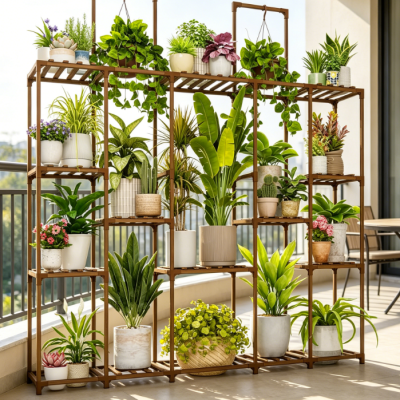
Large Wood Multi-Tier Hanging Plant Display Rack
This hanging rack is intended to be suspended from a sturdy ceiling joist, roof beam, or wall-mounted bracket, creating a floating, multi-tier display that makes use of the vertical space above a window, in a corner, or over a stairwell. The frame is built from solid wood that has been kiln-dried to reduce internal moisture and machined to a smooth, splinter-free surface. Each of the several tiers is a full-length wooden plank, sanded and sealed with a clear, water-repellent lacquer that guards the timber against the occasional drip while allowing the natural grain and tonal shifts of the wood to remain plainly visible. The tiers are linked by ropes or chains — depending on the variant — that pass through reinforced eyelets or pre-drilled holes at each corner, and the entire assembly is gathered at the top into a single suspension ring or hook plate.
The hanging arrangement can be adjusted at the time of installation by altering the knot positions or chain links, allowing the user to set the overall drop and the spacing between shelves to suit the plants and the room. Once the desired configuration is achieved, the knots are drawn tight and the rack hangs with a gentle, balanced presence. The load is distributed across multiple suspension points, and each shelf is rated to carry a number of small to medium-sized pots, provided the weight is spread evenly rather than concentrated at the front edge. The open, airy structure allows light to filter through from surrounding windows and encourages a steady movement of air around the foliage, which can help the compost to dry at a consistent rate.
It is the responsibility of the installer to select a fixing method appropriate to the ceiling or wall material — whether solid timber, concrete, or plasterboard — and to verify that the anchor point can bear the combined weight of the rack, the pots, and the moist potting mix they contain. The hardware used to attach the suspension ring to the structure is not supplied, because the correct choice of screws, plugs, or bolts depends on the specific site conditions. A qualified tradesperson should be consulted if there is any uncertainty. Once hung, the rack should be checked periodically to ensure that all knots and fixings remain secure, particularly in rooms that experience significant changes in temperature or humidity.
The wood surfaces can be kept clean by dusting with a dry cloth and by wiping away any water that spills during watering. If the rack is used in a bathroom or kitchen, the additional humidity is unlikely to harm the sealed timber, but standing water should not be left on the shelves. The rack can be used to display trailing plants such as ivy or string-of-pearls, flowering specimens, or lightweight decorative objects. Its large, multi-tier form provides a generous amount of display area without occupying any floor space, making it a practical option for compact rooms, rented flats where drilling into walls is permitted, or conservatories where plants can be raised closer to the roof glazing.